Best Smart Home Hub UK 2026 — Which One Should You Choose?
September 24, 2026•admin•7 min read
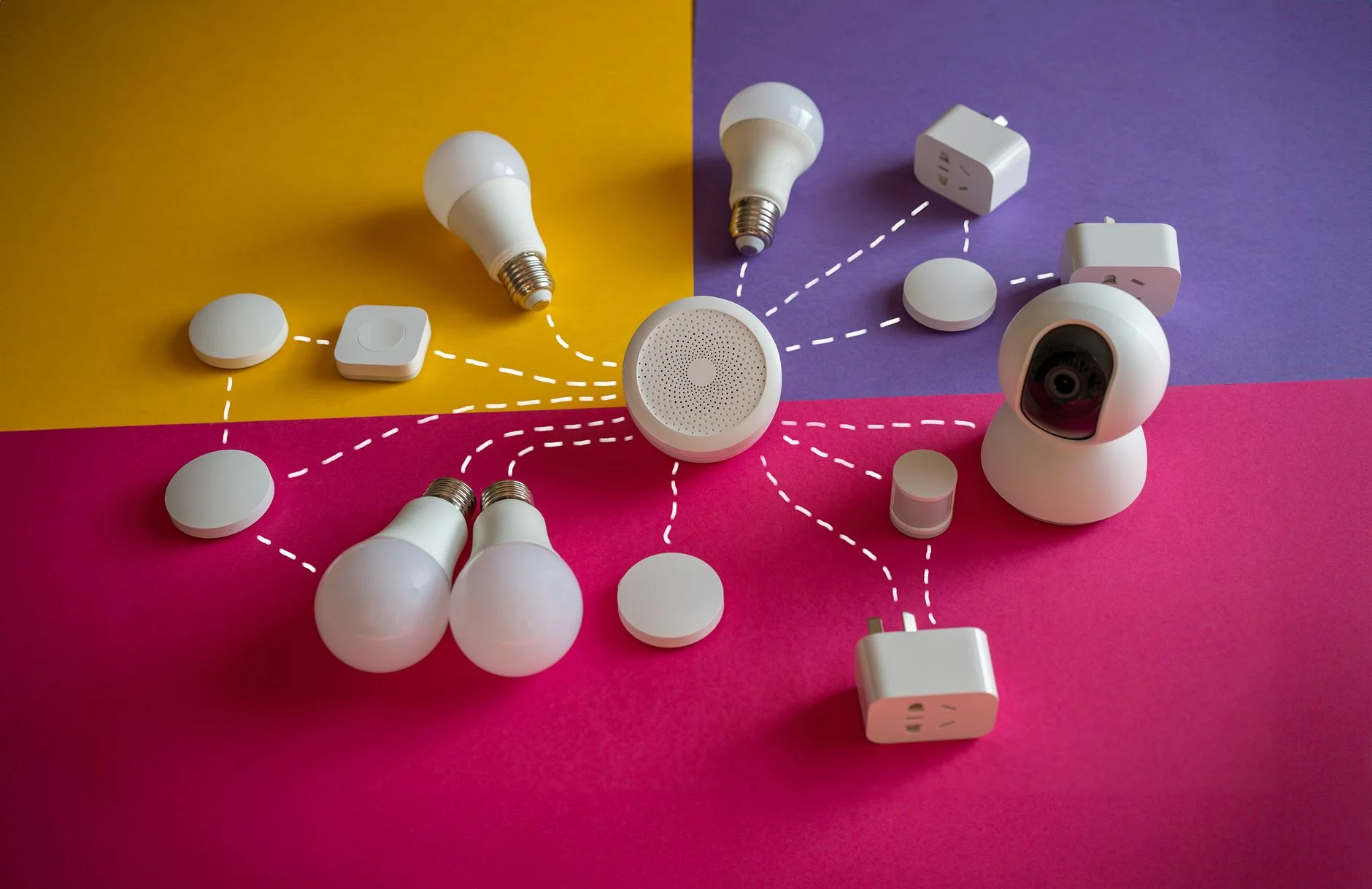
A smart home hub is the brain of your connected home. Without one, your smart lights, thermostat, cameras, and sensors exist in separate silos — each controlled by its own app, unable to trigger each other. A good hub unifies everything into a single system where a motion sensor can turn on a light, lock the door, and notify you in one seamless chain. Here’s what’s worth buying in the UK right now.
Do you actually need a dedicated smart home hub?
The honest answer is: it depends. If you only have a handful of devices from one ecosystem — say, all Philips Hue lights and a Nest thermostat — you probably don’t need a separate hub. The brand-specific apps and a voice assistant will handle things adequately. But once you start mixing brands or building automations that cross device categories, a proper hub makes life dramatically easier.
The rise of the Matter standard means many devices now communicate more easily across ecosystems, reducing the need for a dedicated hub. Even so, platforms like SmartThings or Home Assistant offer automation capabilities that far exceed what Google Home or Amazon Alexa can manage natively.
Best smart home hubs in the UK — compared
Hub
Price
Local processing
Matter support
Best for
Samsung SmartThings Hub
£69
Partial
Yes
Mixed-brand homes
Amazon Echo (4th gen)
£89.99
Limited
Yes (Thread border router)
Alexa-first households
Apple HomePod (2nd gen)
£299
Yes (HomeKit)
Yes (Thread border router)
Apple ecosystem users
Home Assistant (local server)
£100–£200 (hardware)
Full
Yes
Power users, privacy-focused
Hubitat Elevation
£129
Full
Yes
Local automation enthusiasts
Samsung SmartThings — Best all-rounder
Samsung SmartThings remains the most popular dedicated smart home hub in the UK for good reason: it works with an enormous range of devices, has a mature automation engine, and supports Matter. The SmartThings app is well-designed and the new Routines system makes complex automations approachable for non-technical users.
The main limitation is cloud dependency — some automations require internet to trigger, which means a broadband outage can leave your smart home partially dumb. Samsung has improved local processing in recent firmware, but it’s not as fully local as Hubitat or Home Assistant. For most UK households with reliable broadband, this is rarely a real-world problem.
Amazon Echo — The easiest entry point
The Amazon Echo (4th generation) pulls double duty as a voice assistant speaker and a smart home hub. It supports Zigbee natively (letting it pair directly with compatible bulbs and sensors) and acts as a Thread border router for Matter devices. If you’re already in the Amazon ecosystem and primarily control devices by voice, an Echo hub is the path of least resistance.
The automation system (Alexa Routines) is simpler than SmartThings but has improved significantly. It handles most common use cases — motion-triggered lights, scheduled heating, door-open alerts — without needing separate hub hardware. Compare all the voice assistants in our UK voice assistants comparison.
Apple HomePod — Best for iPhone households
The Apple HomePod 2nd generation is simultaneously a superb speaker, a Thread border router, and the HomeKit hub that Apple devices need for remote access. If your household is all-Apple — iPhones, iPads, Macs — the HomePod creates a frictionless smart home experience, with Siri shortcuts, Home app scenes, and superb privacy (all processing stays local where possible).
At £299 it’s expensive for hub functionality alone, but as a premium room speaker with smart home intelligence built in, the value calculation changes. HomeKit is the most privacy-respecting of the major ecosystems — a meaningful consideration given the amount of data smart home devices collect. The ICO has published guidance on smart home data worth reading before you commit to any platform.
Home Assistant — For power users
Home Assistant is free, open-source software you run on your own hardware (a Raspberry Pi 4 or a dedicated Home Assistant Green device costing around £99). Everything stays on your local network — no cloud dependency, no subscription fees, and no risk of the service being discontinued. The automation capabilities are extraordinarily powerful; you can trigger actions based on sunrise/sunset, weather forecasts, electricity prices, room occupancy, and more.
The trade-off is setup complexity. Home Assistant rewards time investment, and while the project has become much more user-friendly in recent years, it’s still not plug-and-play. If you’re technically comfortable and value control and privacy, it’s the best long-term choice. Home Assistant’s official documentation is comprehensive and community support is excellent.
What about Matter — does it change things?
The Matter standard, backed by Apple, Google, Amazon, and Samsung, means new devices work across all major hubs without complicated pairing. If you’re buying new devices, choosing Matter-certified products gives you the flexibility to switch platforms in the future without replacing everything. Read our full explainer on Matter for the details.
Our recommendation
For most UK buyers, Samsung SmartThings offers the best balance of capability, ease of use, and compatibility. If you’re already invested in Amazon Alexa, an Echo (4th gen) does the job without extra spend. Apple households should seriously consider the HomePod. And if you have the appetite for a weekend project with long-term payoff, Home Assistant is the most powerful option by a significant margin.